


(Average reading time – 3 minutes)
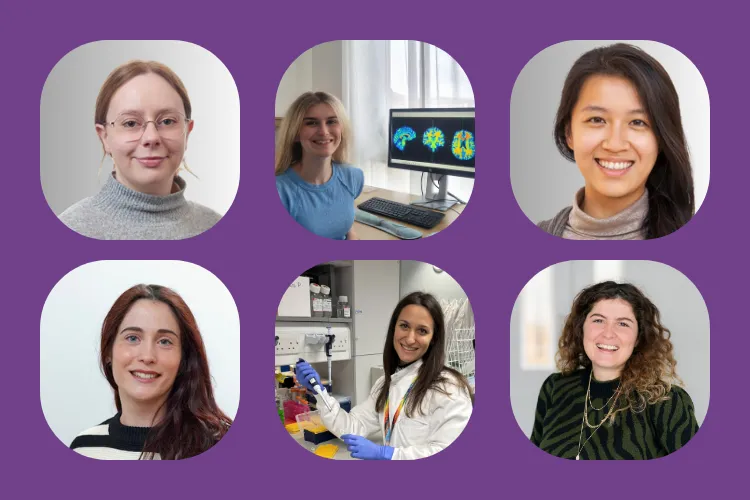
This Postdoctoral Appreciation Week, we're shining a light on some of our fantastic postdoctoral researchers at the Anne Rowling Clinic.
Our postdocs play an important role in advancing research in neurological conditions, bringing fresh ideas, expertise and curiosity to their work. They work on a wide range of projects from laboratory research to using brain imaging to better understand conditions and improve care for patients.
Introducing
Beth York
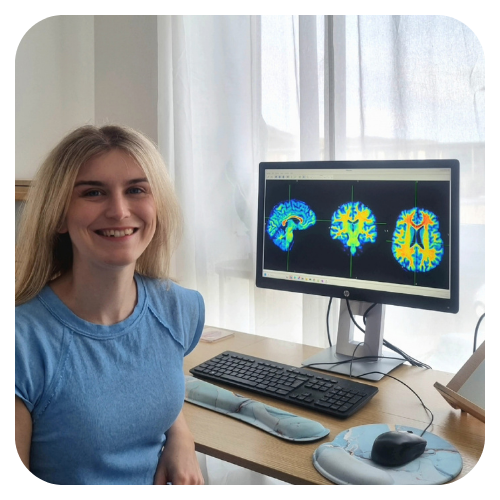
Beth York is a Postdoctoral Research Fellow in the Multiple Sclerosis (MS) Imaging Lab. Her research focuses on microstructural MRI to better understand disease progression in MS. Her work mainly centres on the FutureMS cohort, a longitudinal study of people recently diagnosed with relapsing-remitting MS. She enjoys supervising student projects and leads a FutureMS sub-study aiming to understand the mechanisms underlying fatigue in MS using ultra-high field MRI.
Outside of work, you might find Beth climbing or paddleboarding in the Scottish sunshine. Otherwise, she will be hiding from the rain planning her next trip abroad.
Christine Farrugia
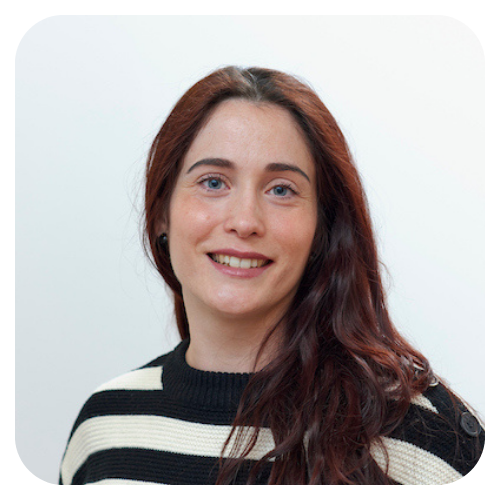
Christine is a Postdoctoral Research Fellow who's research involves extracting biomarkers of multiple sclerosis (MS) from structural MRI data, as part of the FutureMS and PrecisionMS projects.
Within PrecisionMS, she is developing a method to measure brain volume loss (atrophy) in individual patients using standard-of-care MRI scans. The aim is to make better use of MRI scans that patients are already having as part of their routine clinical care, providing a more detailed picture of their MS without the need for an additional research scan.
Outside of work, Christine enjoys reading and discovering new places.
Georgia Andreopoulou
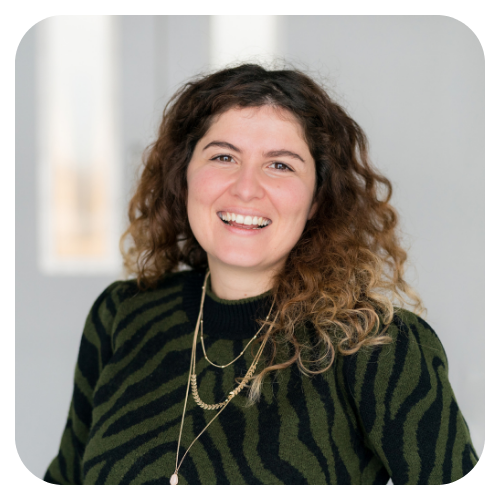
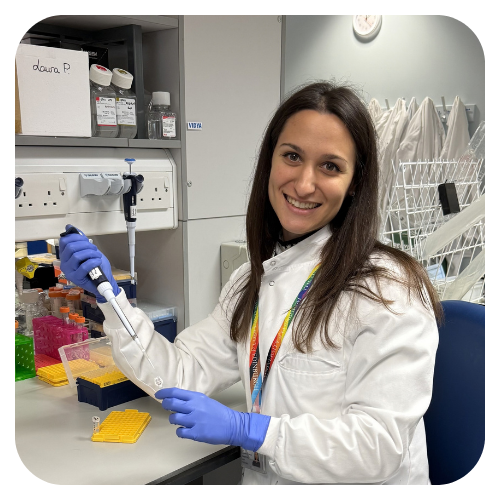
Laura Planas Serra
Samantha Ho
I am Sam, a postdoctoral research fellow who joined the Selvaraj and Chandran lab that is tightly associated with the Anne Rowling Clinic last year in September 2025 to investigate the physiology of neuromuscular junction in the context of motor neuron diseases using a three-dimensional human stem cell derived neuromuscular assembloid model. I am interested in the impacts of motor neuron dysfunction on muscle functions and identifying potential avenues to intervene and prolong muscular function in motor neuron diseases.
Apart from working on the biological intricacy of motor neuron diseases, I enjoy solving puzzles through playing boardgames with my friends in my free time.

Sophie Hawkins
I am a Postdoctoral Research Fellow embedded within the UK-Dementia Research Institute (UK-DRI), Anne Rowling Clinic, Euan MacDonald Centre for Motor Neuron Disease Research, and in partnership with the UK Motor Neuron Disease Research Institute (UK-MNDRI). My expertise lies in human stem cell modelling of neurodegenerative disease.
As part of the discovery science team working with Dr Bhuvaneish Selvaraj and Professor Siddharthan Chandran, my research focuses on the contribution of oligodendrocytes—specialised support cells in the nervous system—to motor neuron disease. Using human iPSC-derived oligodendrocytes, I generate disease models in the laboratory that aim to understand what goes wrong in these cells, how this impacts their health, and the health of the neurons that they support. My work ultimately aims to determine whether improving the health of support cells could help protect motor neurons and reduce neurodegeneration.
Profile links
Further links
Explore the different types of research we do
Find out how you can support research at the Anne Rowling Clinic
Header image. Top row: Sophie Hawkins, Beth York, Samantha Ho. Bottom row: Christine Farrugia, Laura Planas Serra, Georgia Andreopoulou